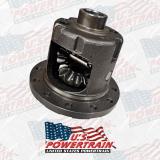
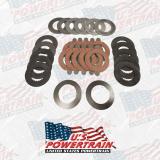
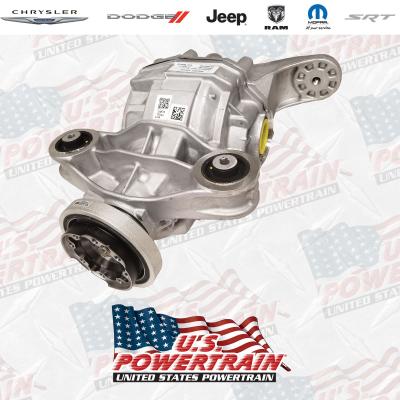
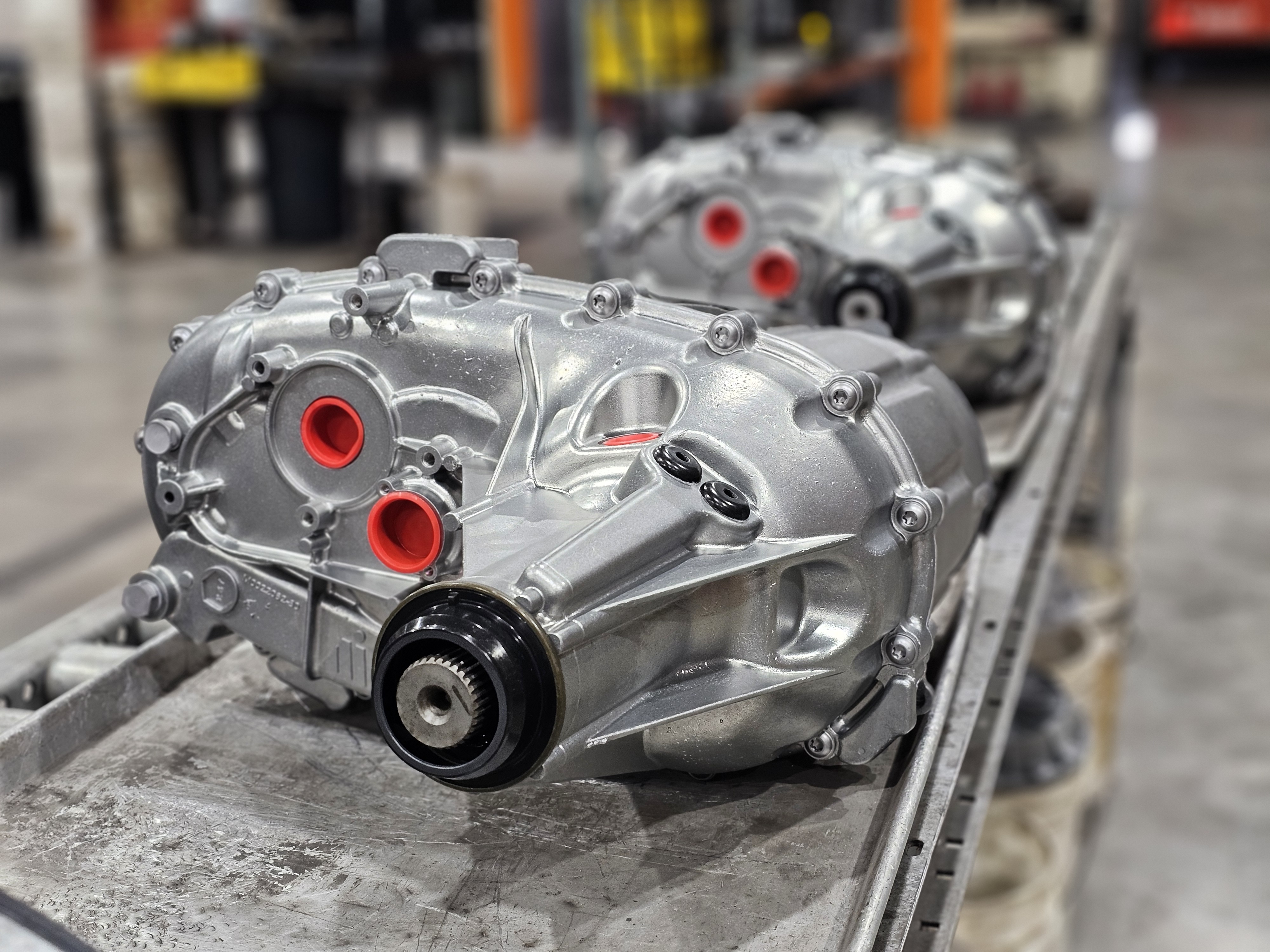
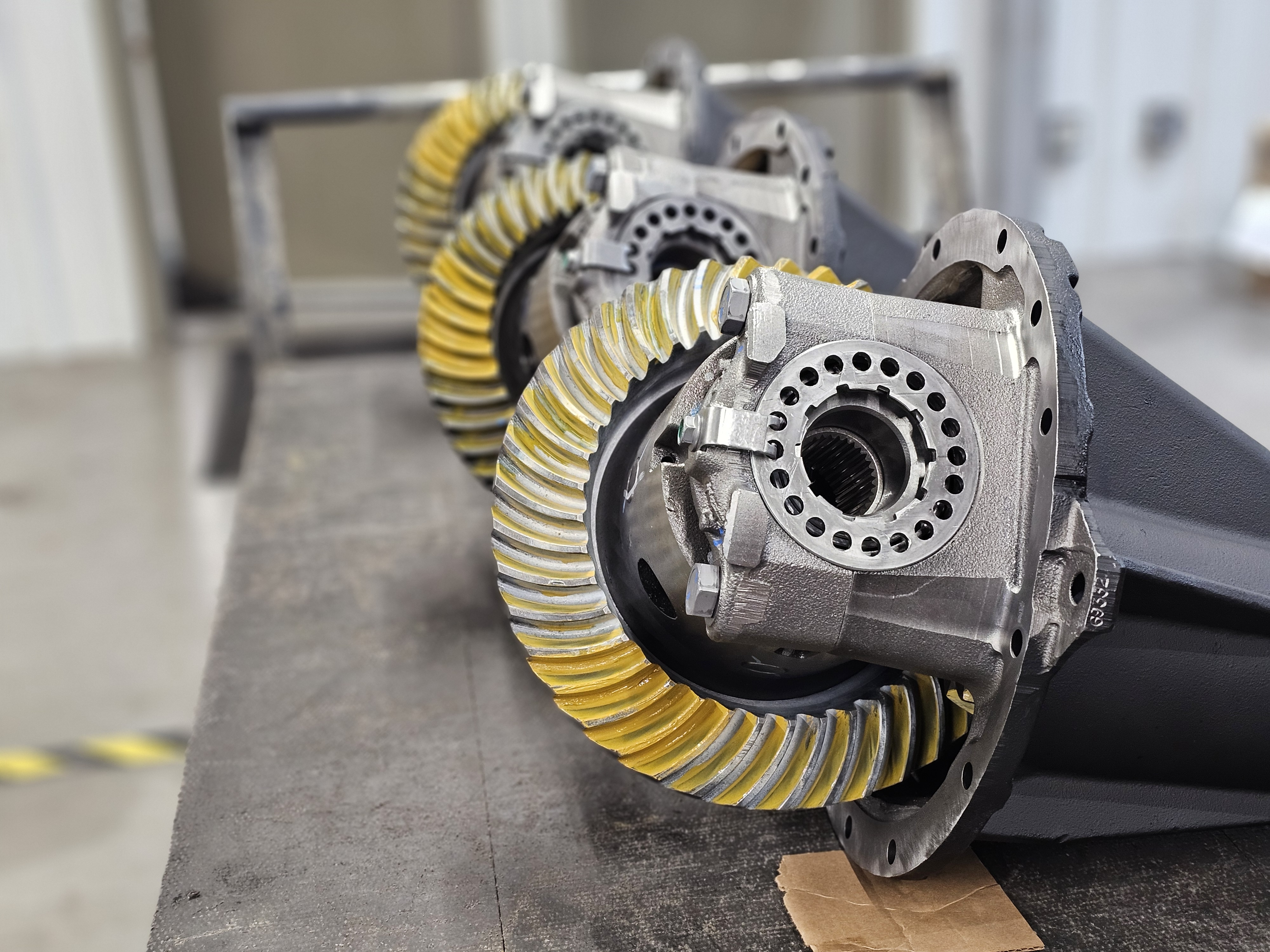
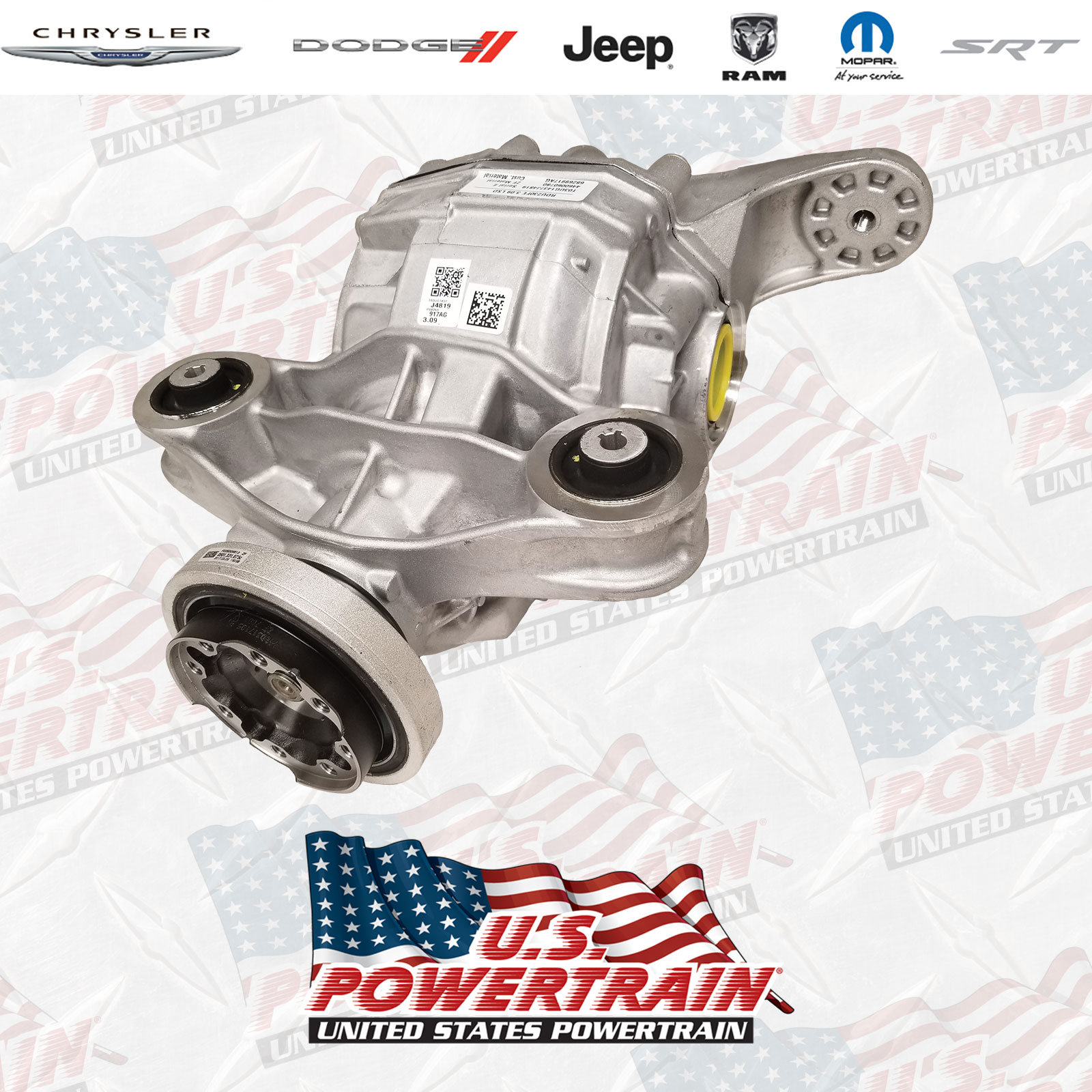
New ZF 195mm Rear Differential Assembly | 2.62 Conventional Open | 2015–2021 Chrysler 300 / Dodge Charger / Dodge Challenger RWD
What This Replacement Job Actually Involves
Rear differential replacement on the LX/LC platform is a moderate-complexity drivetrain service job. It is not a quick maintenance task, but it is within reach of a motivated DIY owner with a proper lift, quality tools, and access to a factory service manual for their specific model year. Understanding the full scope before starting prevents mid-job surprises.
The project requires the vehicle to be safely elevated and supported on jack stands, the driveshaft to be disconnected from the differential flange, and both rear axle shafts to be disconnected from the differential. The differential assembly is then unbolted from the rear cradle and lowered out. Installation reverses this sequence, and the job concludes with gear oil fill, plug torque, and a post-heat-cycle leak inspection.
Key companion services to address during the same job:
Axle shaft seals — With the differential out of the vehicle, inner axle shaft seals are accessible. If the failed differential contaminated the gear oil with metal debris, those seals should be replaced. This is a natural pairing: doing it now eliminates a future job to address a leak that develops after the new differential is in service.
Differential mounting bushings / hardware — Inspect the cradle mounting points while the differential is removed. If mounting bushings show deterioration, this is the opportunity to address them with minimal additional labor.
Rear driveshaft U-joints — With the driveshaft disconnected, inspect U-joints for play or wear. Worn U-joints are a leading cause of drivetrain vibration on these platforms and a natural companion service when the driveshaft is already off the vehicle.
DIY time estimate: 4–8 hours for an experienced shade-tree mechanic with proper equipment. Add time if axle seals, bushings, or driveshaft components require service. First-timers should plan conservatively — the job has no steps that are individually difficult, but there are many of them, and thorough service manual review before starting is strongly recommended.
Professional shop estimate: Typically 2–4 hours of labor at a shop with a lift and manufacturer service data.
Choosing the Right Differential for Your Application
The LX/LC platform offers multiple rear differential configurations across the 2015–2021 production run. Not all vehicles use the same assembly, and the 440-1543 is specific to one configuration. This decision table helps clarify which replacement category is correct for your situation.
Your Vehicle Configuration |
Correct Replacement Category |
|---|
V6 3.6L, RWD, 2.62 open ratio, no Posi-Traction (option codes DLL + DR2 + DS8) |
This assembly (440-1543) |
V6 3.6L, RWD, 3.07 ratio, open differential |
Different assembly — 3.07 open for 195mm fitment |
V6 3.6L, AWD (Chrysler 300 AWD or Charger AWD) |
Different assembly — AWD variant uses different differential architecture |
V8 5.7L, RWD, 2.62 or 3.07 ratio |
Different assembly — 5.7L uses 230mm differential family |
V8 6.4L Scat Pack, SRT 392 |
Different assembly — 230mm with or without limited slip |
Any model with Posi-Traction / Limited Slip (option code DS6) |
Different assembly — LSD requires limited slip-specific replacement |
Decision signal: If your build sheet shows all three codes — DLL + DR2 + DS8 — you have confirmed this is the correct replacement category. If any one of those three codes differs, a different assembly is required.
New vs. Remanufactured: When Each Makes Sense
Choose a new assembly when you want the benefit of no prior service history, factory-set bearing preload, and full first-service-life ahead of you. New assemblies also eliminate the core return obligation that comes with remanufactured units — which can be inconvenient if the failed unit is heavily contaminated, damaged beyond the core acceptance threshold, or simply not convenient to package and return.
A remanufactured assembly may be appropriate when the specific ratio or configuration is not available as a new unit, or when budget is the primary constraint. Remanufactured assemblies from reputable rebuilders are a legitimate option — but they are not equivalent to new, and the quality of remanufactured differentials varies significantly by rebuilder. Verify that any remanufactured assembly was rebuilt with new bearings and seals, and that the gear mesh was properly set before accepting the unit.
Frequently Asked Questions
How do I know if my vehicle has the 195mm or 230mm differential?
The most reliable method is the factory build sheet. Access your VIN-specific build sheet at mopar.com and look for the axle option codes. Option code DR2 confirms the 195mm ring gear. Option code DR4 or similar indicates the larger 230mm family. As a general rule of thumb: V6 (3.6L) RWD models use the 195mm; V8 models (5.7L, 6.2L, 6.4L) use the 230mm or larger. There are exceptions — some AWD configurations complicate this — so the build sheet is the definitive source.
Can I upgrade to a higher gear ratio or add limited slip using this replacement as a starting point?
The 440-1543 is an OEM-spec replacement for the 2.62 open configuration. If your goal is a ratio change (for example, moving to a 3.07 to improve acceleration in a V6 car) or adding limited slip capability, the replacement assembly itself determines those characteristics — you would select a different assembly that provides the ratio and differential type you want. Consulting a forum community specific to your vehicle platform (ChallengerTalk, LXForums, ChargerForums) will surface real-world experience from owners who have made these changes on the same vehicles.
What gear oil do I need after installation, and how much?
The factory service manual specification for the 2015+ 195mm ZF differential is SAE 75W-85 (API GL-5) synthetic gear oil, Mopar part number 68232948AA or an equivalent meeting the GL-5 API classification. The 195mm unit capacity is approximately 0.74 quarts (0.7 liters) — this is a notably small capacity compared to older or larger differentials, and overfilling can cause pressure issues. Fill through the fill port with the vehicle level until oil begins to trickle from the opening, then install and torque the fill plug. Some owners use 75W-90 GL-5 synthetic as an acceptable substitute when the 75W-85 spec is unavailable — both meet the API GL-5 classification required.
Is there a break-in period for a new differential?
A new differential does not require a formal performance break-in procedure the way a new engine might. However, it is considered good practice to change the gear oil after the first 500–1,000 miles of service following a differential replacement. This initial oil change removes any fine metal particles generated during the ring and pinion mesh seating process. After this early fluid change, the factory-specified service interval applies.
Does the warranty cover both parts and labor if the assembly fails?
US Powertrain's 36-month/36,000-mile warranty for passenger cars and light trucks covers the part. Labor coverage varies by the terms of US Powertrain's warranty documentation — contact US Powertrain directly for full warranty terms, including what documentation is required to make a claim, what voids coverage, and whether labor is included or excluded. Retain your purchase receipt and installation documentation as these are typically required for warranty claims.
Why is no mounting hardware included with the assembly?
The OEM fasteners used to mount the differential to the rear cradle are vehicle-side hardware — they are not part of the differential assembly itself. On many replacement jobs, the original mounting hardware from the failed unit is in serviceable condition and can be reused if it is undamaged and properly torqued. If hardware is damaged or unavailable, the correct fasteners are available from Mopar dealers or drivetrain specialty suppliers. Refer to the factory service manual for your model year to confirm the correct hardware specification.
How a Rear Differential Works — And Why the Open Design Matters
The rear differential's job is to transfer torque from the driveshaft to both rear wheels while allowing the wheels to rotate at different speeds during cornering. Without this speed differential, a vehicle making a turn would experience tire scrub — the outside wheel travels a longer path than the inside wheel through any corner, and if both wheels were forced to spin at the same speed, one would drag.
The open differential design (which is what this assembly provides) achieves this with a simple set of spider gears in the carrier. Under normal conditions, the open differential sends equal torque to both output shafts. In a turn, when the outside wheel needs to spin faster than the inside, the carrier allows the difference in speed by letting the spider gears rotate on their own axis. This is mechanically elegant and highly reliable — there are no clutch packs to wear, no friction modifier requirements, no electronic controls.
The limitation of the open design appears when one wheel has significantly less traction than the other. The differential's nature is to equalize torque on both shafts — which means if one wheel is on ice or in the air, the open differential routes torque to the low-resistance spinning wheel, and the high-traction wheel receives nothing. On the 2015–2021 Chrysler 300, Charger, and Challenger V6 RWD platform, the factory electronic stability and traction control systems are specifically calibrated to compensate for this characteristic — applying selective braking to the spinning wheel and managing throttle to restore traction. For daily driving and most adverse conditions, this combination performs well. The open differential's limitations become apparent primarily at the performance extremes — hard launches on a prepped drag surface, sustained loose-surface driving — which is where the limited slip option on higher-performance variants of these platforms addresses a different buyer need.